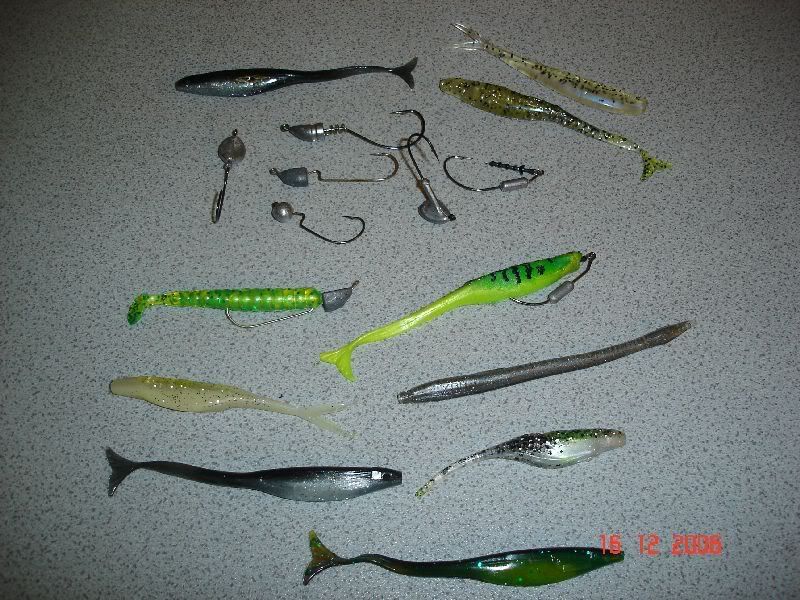
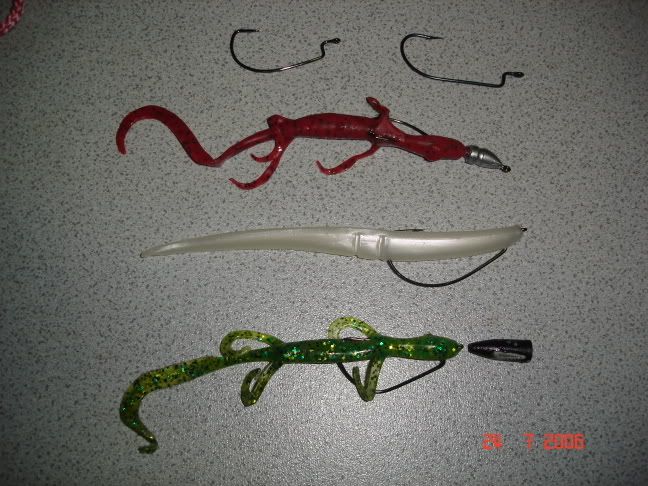
Ikanbilis, yes, I can elaborate if you’ll allow me some time to prepare something. I’ve always said that mechanics for fishing soft plastics is a tackle “system” in that the rod, reel and line at one end (the dry end) and the leader, jig head or hook and the soft plastic at the other (the wet end) are all part of the “system”. These bits are all easily described and illustrated.
Presentation is the next part. It’s what you do with your plastic bait when you cast it out. It’s how you work it or fish it in the water. I think this is the bit the Prof Pacman says he needs more detail on as well. You know what tackle to use, you have the plastic baits and jig heads and you have a pretty good idea on how to rig them. You just don’t seem to be able to catch anything with them.
After 20-30 trips with little to show, I think something must be wrong, especially if you are catching fish from the same locations using other baits. Let me see if I can put something together that might help identify what that might be.
There will always be some overlap in the rigging methods and jig head/hook combinations you use to present soft plastics in different ways for different circumstances. Think of your jig head or hook as a presentation vehicle. Something which allows you to present the soft plastic in a certain way. The way you rig it has to be tailored to how you will present it. If you get the rigging wrong, you’ll be limited in how you can fish the plastic. Once you have that part visualised, the hardest part to get your head around and the thing that I think causes the most difficulty in adapting to soft plastics is the fact that whilst they are lures and have many similarities with other lures, they “can” be, or even “need” to be fished in a different way to other types of lures.
They are similar to other lures in that they require the angler to cast them out and “work” them to impart life and action. Just like hard body lures, you retrieve them. But unlike other lures, they get eaten primarily when the plastic is sinking or paused, not when it’s actually being retrieved.
I know you often impart a jerky retrieve to a minnow or jerk bait and quite often it will get eaten on the pause, but soft plastics carry this even further. You fish them with longer pauses and allow them to coast, glide, sink, wiggle in place and you can fish them in the vertical plane very effectively, not just the horizontal plane. No other lure type combines the potential for fishing both vertically and or horizontally and or “in place” at the same time.
One of the ways to fish a plastic is to cast it out and then just let it sink. Do nothing. It takes a great deal of confidence to let the plastic just freefall through the water, gaining all its action from the supple plastic, the freefall through the water and the way you have rigged it, rather than action imparted with the rod tip. This part of the “presentation” can always be incorporated in the retrieve style, even when fishing some of the more active soft plastic techniques with more aggressive actioned soft plastics.
Unlike other types of lures where a fish hits hard and aggressively and hooks up immediately with the rod tip slamming over, the bites or pick-ups on soft plastics are often very gentle and unless you develop a feel for what you are doing, bites may go unnoticed or undetected. In this respect it’s more like bait fishing than lure fishing and I always think is much more subtle and requires a more delicate touch.
So let me write something about presentation. An hour on the water with an experienced soft plastic user will teach you much more than words ever could, but let me try.